
How do you measure the impact of a green bond and how does this impact change over time?
We analysed Handelsbanken's XS2265968284 green bond across six green allocation and impact reports from 2020 to 2025.
We found that the bond's avoided emissions per SEKm, a common green bond impact metric fell by roughly 90%. Over the same period, the green asset portfolio grew while the asset mix changed. Green buildings went from 36% to 89% of the portfolio while the share of renewable energy fell.
Is this a good or bad signal?
An important piece of context before we dive deeper
Handelsbanken uses a portfolio approach to report on its bonds' allocation and impact. The proceeds from the bond are not linked to specific projects. Instead, they are backed by a pool of green loans that changes over time as loans are repaid and new ones are added. So the assets behind the bond in 2025 can look very different from those in 2020.
Why avoided emissions fall when money moves from renewables to buildings
Avoided emissions are measured against a baseline, and that baseline differs by asset type. In Handelsbanken's green portfolio, on average from 2020 to 2025, renewable energy avoided 45.5 tCO₂e per SEKm, compared with just 0.2 tCO₂e per SEKm for green buildings (note: we used the average avoided emissions per use of proceed to account for changes in emission based factors over time). That's around 230 times more per SEKm. This is because renewable energy directly replaces emissions from energy generation, while a green building is only credited with the energy it saves compared with a standard building.
The improvement from a green building is material but it is significantly smaller per SEKm. So as green buildings grew from around a third of the pool to almost 90%, avoided emissions per SEKm fell. This is about the mix of assets not their underlying quality.
The green bond now matches the bank's real estate lending book
Handelsbanken's core business is lending, in particular mortgages and lending to commercial real estate. Together these make up SEK 2,102bn of its SEK 2,307bn on-balance lending, around 91%. By comparison, lending to power producers is just SEK 1.4bn (0.06%). With green buildings now at 89% of the green portfolio, the green bond closely mirrors the 91% of the loan book that sits in real estate.
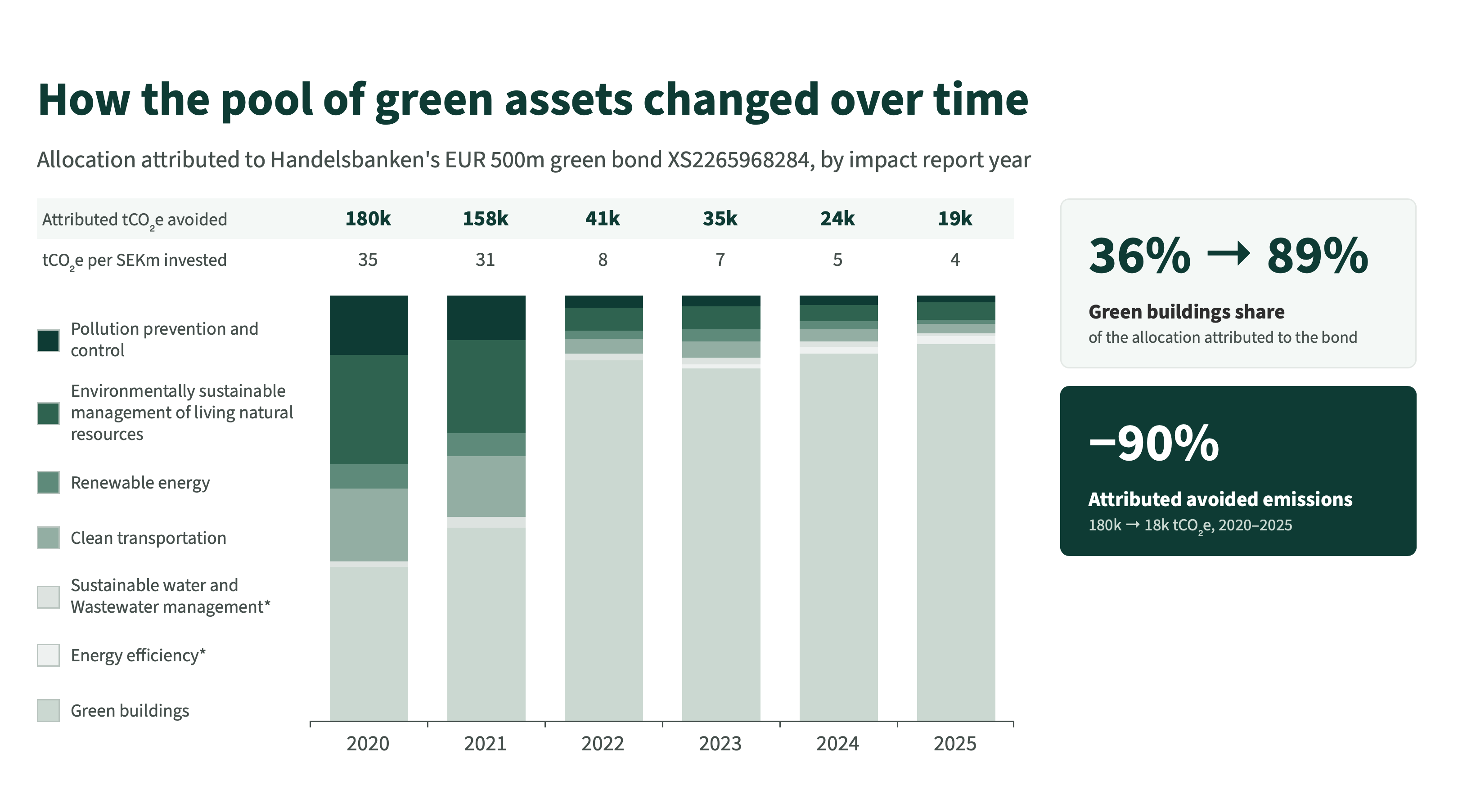
Figure 1: Attributed share of use of proceeds from 2020 to 2025. No avoided emissions reported*
Real estate is also where most of the bank's direct financed emissions sit. On a Scope 1 and 2 basis, mortgages and commercial real estate account for around 65% of its financed emissions. So moving the green bond towards green buildings means financing the bank's core business and lending activity.
The other side of the argument
There are some valid reasons to argue otherwise. A September 2026 report by the Institute for Energy Economics and Financial Analysis (IEEFA) found that across Europe's 47 largest banks, renewable energy receives only around 20% of green bond proceeds but delivers 90% of the reported avoided emissions, while green buildings receive around 70% of proceeds but deliver just 3%. IEEFA argues that banks rely too heavily on existing green mortgages and should do more to finance renewable energy.
IEEFA raises another valid point which is the type of building activity being financed is important. Many green bond portfolios contain mortgages on homes that are already “green” either through credible building certifications and standards or in alignment with EU Taxonomy criteria such as a building being within the top 15% of the national or regional building stock expressed as Primary Energy Demand (PED). These buildings use the same amount of energy whether or not they are labelled as green so refinancing them does not reduce emissions. However, renovations and energy upgrades are different as they lower the energy a building actually uses. Additional data on the funding share split between existing green buildings and renovations would help support Handelsbanken’s case for shifting the composition of their green asset portfolio if the funding is directed towards the latter.
Large companies: the bigger emissions number
The bank's biggest reported financed emissions come from large companies, other: 3.2 million tCO₂e from SEK 54bn of lending. Almost all of that is the companies' own scope 3. Managing and reducing this exposure requires engagement, transition finance, as well as borrowers setting their own scope 3 targets which is challenging for several reasons but necessary.
In 2025, Handelsbanken developed a group-wide process for climate and transition dialogues with corporate clients, aimed at managing transition risks and supporting them towards net zero. However, the bank is yet to set a public target for this part of their lending book.
One metric alone can miss an important piece of context
Avoided emissions per SEKm is a useful number, but on its own it can miss an important piece of context. In Handelsbanken's case, the green bond now reflects the bank’s core lending activities. Transparent data on the funding split between existing building stock and renovations would help strengthen Handelsbanken’s case if the capital is allocated towards the latter. Now it's clear there is work to be done on financed emissions for large companies, in particular their scope 3 emissions.
Sources: Handelsbanken's green bond allocation and impact reports for 2020 to 2025; Handelsbanken - Annual Report 2025; Handelsbanken - Our climate impact; IEEFA - European banks' green bond gap (September 2026)